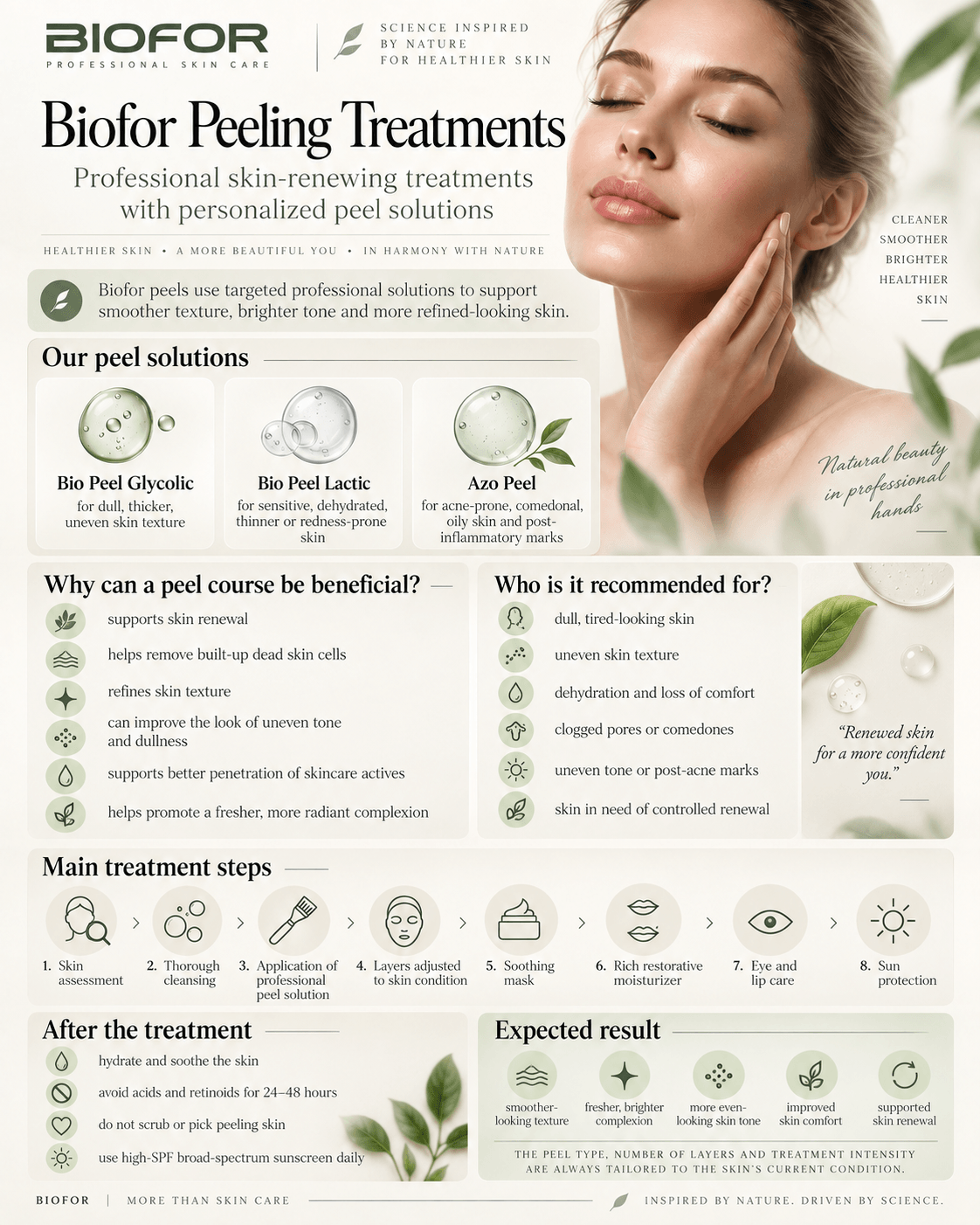
Biofor Peeling Treatments are designed to gently yet effectively renew the skin’s surface. During professional exfoliation, a peeling solution selected according to the skin’s current condition helps remove dead skin cells, refine skin texture, improve uneven tone, and promote a fresher, smoother and more radiant complexion.
Biofor peeling treatments do not follow a one-size-fits-all protocol. The type and intensity of the treatment, the number of layers applied, and the frequency of the treatment course are always tailored to the condition of the skin.
The aim of Biofor peeling treatments is not to over-irritate the skin, but to provide controlled, professionally structured skin renewal, complemented by soothing, hydrating and barrier-supportive steps.
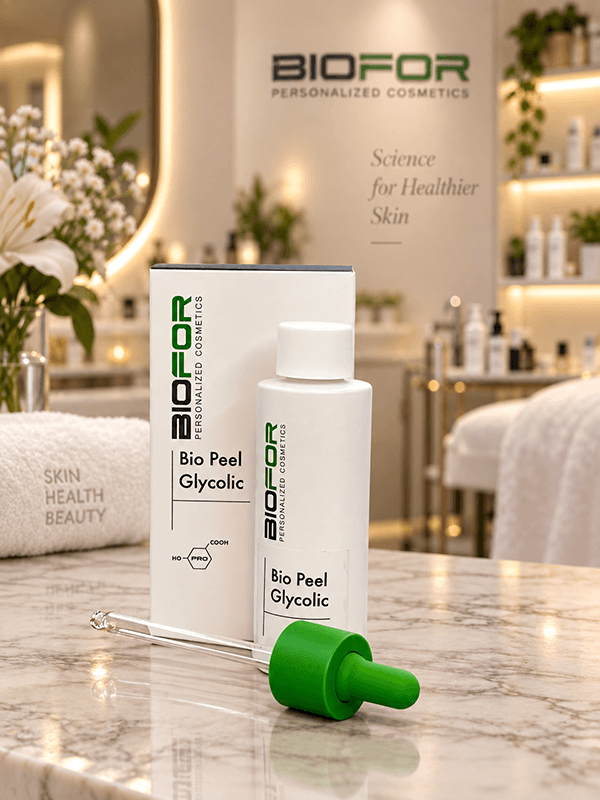
Bio Peel Glycolic
Bio Peel Glycolic is a professional glycolic acid-based peel particularly suitable for dull, thicker, uneven-textured skin that is not overly sensitive.
Glycolic acid peels are used for more intensive surface renewal, helping to refine skin texture, promote radiance and improve the appearance of uneven skin tone.
Bio Peel Lactic
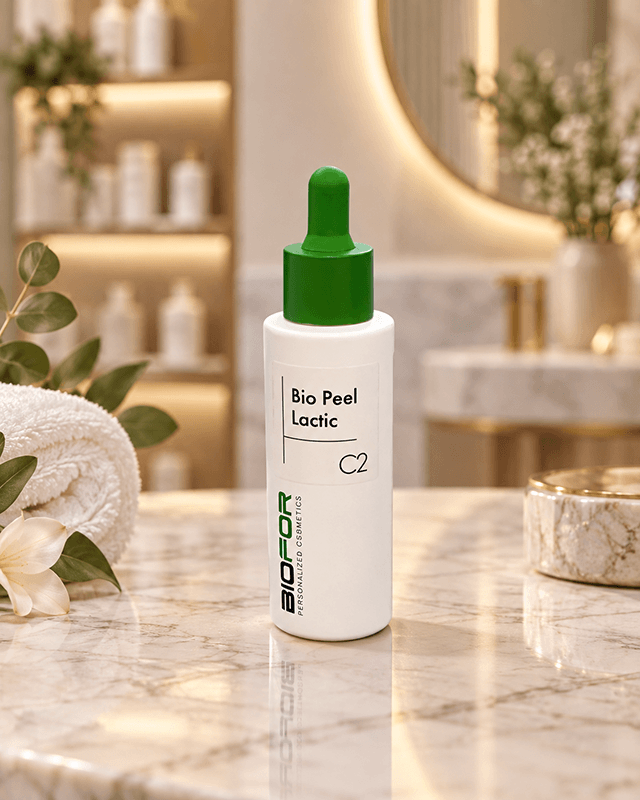
Bio Peel Lactic is a professional lactic acid-based peel that offers a gentler approach. In addition to its exfoliating properties, lactic acid is also known for its hydrating effect, making it particularly suitable for more sensitive, delicate, thin, redness-prone or dehydrated skin.
The aim of this peel is not intensive exfoliation, but gentle skin renewal while maintaining comfort and supporting a smoother, fresher-looking complexion.
Azo Peel
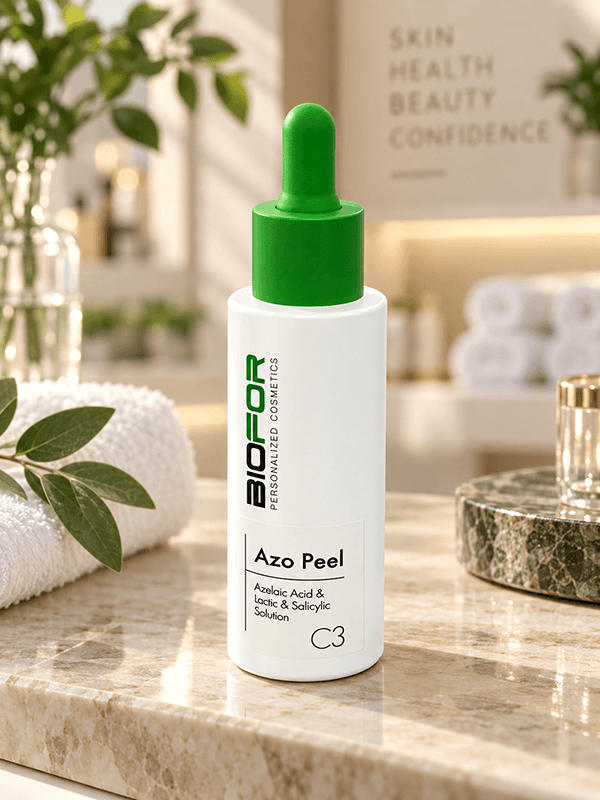
Azo Peel is a professional azelaic acid-based peeling solution particularly well suited to oily, comedonal and acne-prone skin, as well as skin affected by post-inflammatory marks or uneven tone.
Azelaic acid is a valuable ingredient in modern skincare because it can play a role in the care of problematic and acne-prone skin while also supporting the improvement of post-inflammatory marks, uneven skin tone and pigmentation.
Why do we prefer peeling treatments as a course?
Even a single peeling treatment may leave the skin feeling fresher, smoother and more radiant, but more noticeable and longer-lasting improvement often requires a course of treatments. The advantage of a treatment course is that the skin is not exposed to one excessively intensive procedure, but rather to a series of carefully controlled treatments that build on one another.
A peeling programme works best when combined with a carefully designed home skincare routine. In pigmentation-prone skin, consistent sun protection and regular use of pigment-regulating active ingredients are essential. For acne-prone skin, protecting the skin barrier, avoiding excessive drying and using non-comedogenic hydration are particularly important. In sensitive skin, the intensity of the peel must be selected with extra care.
Who is it recommended for?
Biofor peeling treatments may be suitable for:
The appropriate peeling solution is always selected following an assessment of the skin’s current condition. This is particularly important in sensitive, dehydrated, rosacea-prone, acne-prone or pigmentation-prone skin.
Biofor Peeling Treatment Protocol
Every Biofor peeling treatment begins with an assessment of the skin’s current condition. Hydration, sensitivity, skin thickness, tone, pore condition, pigmentation, tendency towards inflammation and the condition of the skin barrier are all taken into consideration.
During the consultation, we also review the home skincare routine, particularly the use of exfoliating acids, retinoids, vitamin C products, anti-acne active ingredients, photosensitising products, and any recent cosmetic or medical-aesthetic treatments.
Based on this assessment, the most suitable Biofor peeling solution — Bio Peel Glycolic, Bio Peel Lactic or Azo Peel — can be selected.
The first practical step of the treatment is thorough yet gentle cleansing of the skin. Make-up, sebum, sunscreen and surface impurities are removed so that the professional peeling solution can be applied evenly to clean skin.
Proper preparation is particularly important before a professional peel, as it influences both the effectiveness and safety of the treatment. The skin should be thoroughly cleansed without unnecessary friction or irritation.
Following cleansing, the peeling solution selected for the skin’s current condition is applied.
Bio Peel Glycolic may be selected when more intensive surface renewal is required for dull, thicker or uneven-textured skin.
Bio Peel Lactic may be preferred for more sensitive, dehydrated, thin or redness-prone skin when a gentler, more comfortable exfoliating treatment is appropriate.
Azo Peel may be selected when the main concerns include oily or acne-prone skin, comedones, post-inflammatory marks or pigmentation irregularities.
The peeling solution is applied in a controlled manner. The number of layers, exposure time and overall treatment intensity depend on the current condition and sensitivity of the skin, the treatment goal and the skin’s individual response.
The aim is not aggressive exfoliation, but professionally controlled skin renewal. During the treatment, the skin’s response is continuously monitored. Mild tingling, warmth or temporary redness may occur with certain peels, but treatment intensity is always adjusted to maintain skin comfort and safety.
After the peeling phase, a soothing and hydrating mask is applied. Its purpose is to improve comfort, help calm temporary redness, reduce tightness and support the skin barrier.
This step is particularly important because the skin may temporarily become more sensitive following professional exfoliation. The treatment therefore does not end with the peeling phase: soothing and restorative care is an integral part of the protocol.
Following the mask, a rich, comfort-enhancing moisturiser is applied to soothe the skin, support hydration and provide a protective, restorative finish.
After a peeling treatment, maintaining moisture and supporting the skin barrier are especially important. An appropriate finishing cream can help reduce tightness and leave the skin feeling softer and more comfortable.
Special attention is also given to the delicate eye and lip areas. These areas have thinner, more sensitive skin and can become dehydrated more easily.
Targeted eye and lip care supports hydration and comfort while contributing to a well-cared-for overall appearance.
During daytime treatments, the protocol is completed with high-level sun protection. UV protection is particularly important after peeling because freshly treated skin may be more sensitive to sunlight.
For pigmentation-prone skin, sun protection is not merely an aftercare recommendation — it is a fundamental part of maintaining the results of the treatment.
The sunscreen is selected according to the condition of the skin and the individual needs of the client.
When is a Biofor Peeling Treatment not recommended?
Biofor peeling treatments should be avoided or postponed in the following situations:
In cases of severe, rapidly worsening, painful or scarring acne, persistent inflammation or an unexplained skin lesion, dermatological consultation is recommended before cosmetic treatment.
Post-treatment home care and timing
After a Biofor peeling treatment, home care should focus on soothing and hydrating the skin, supporting the skin barrier and providing consistent sun protection. The skin may temporarily be more sensitive during the days following the treatment, so the routine should remain simple, gentle and well tolerated.
On the day of treatment
Avoid make-up, sauna and steam rooms, hot baths, strenuous exercise, tanning beds, direct sun exposure, exfoliating acids, retinoids, strong vitamin C or other potentially irritating active ingredients, granular scrubs, alcohol-based or drying products, and rubbing or picking at the skin.
Mild redness, warmth, tightness or increased sensitivity may occur after the treatment. Depending on the type and intensity of the peel and the individual sensitivity of the skin, these can be normal and temporary reactions.
During the first 24 hours
The skin should primarily be allowed to rest.
Use a gentle cleanser, a soothing moisturiser and high-SPF broad-spectrum sun protection during the day. Avoid mechanical irritation and do not introduce any new active skincare ingredients.
During the first 24–48 hours
Continue to avoid exfoliating acids, retinoids, benzoyl peroxide, strong vitamin C products, irritating or drying actives, granular scrubs, alcohol-rich or heavily fragranced products, sauna, steam rooms and hot baths.
Strenuous exercise should also be avoided if the skin remains red or feels warm.
During days 3–5
Continue to prioritise gentle, hydrating and barrier-supportive skincare.
A simple routine consisting of gentle cleansing, a hydrating or soothing serum or moisturiser, barrier-supportive care and consistent daytime sun protection is usually sufficient.
If the skin still feels tight, appears red or sensitive, or is visibly peeling, active ingredients should not yet be reintroduced.
From days 5–7
Active ingredients may generally be gradually reintroduced once the skin is calm, comfortable, no longer red or irritated, and there is no significant peeling.
Gentle pigmentation-targeting ingredients, mild antioxidants and previously well-tolerated active products can be introduced gradually.
Exfoliating acids and retinoids should always be reintroduced carefully and not all at once.
If mild peeling occurs, the skin should never be scrubbed, peeled or picked. Allow the natural renewal process to take place at its own pace.
Sun protection after peeling
Sun protection is particularly important following a peeling treatment. A high-SPF, broad-spectrum sunscreen should be used every morning, regardless of the season.
Would you like to refresh and rejuvenate your skin? Our professional peeling treatments help your complexion look brighter, smoother, and more radiant. Take the first step toward beautiful skin today!
